
Returning to the Gym After 40? Your First Four Weeks Back
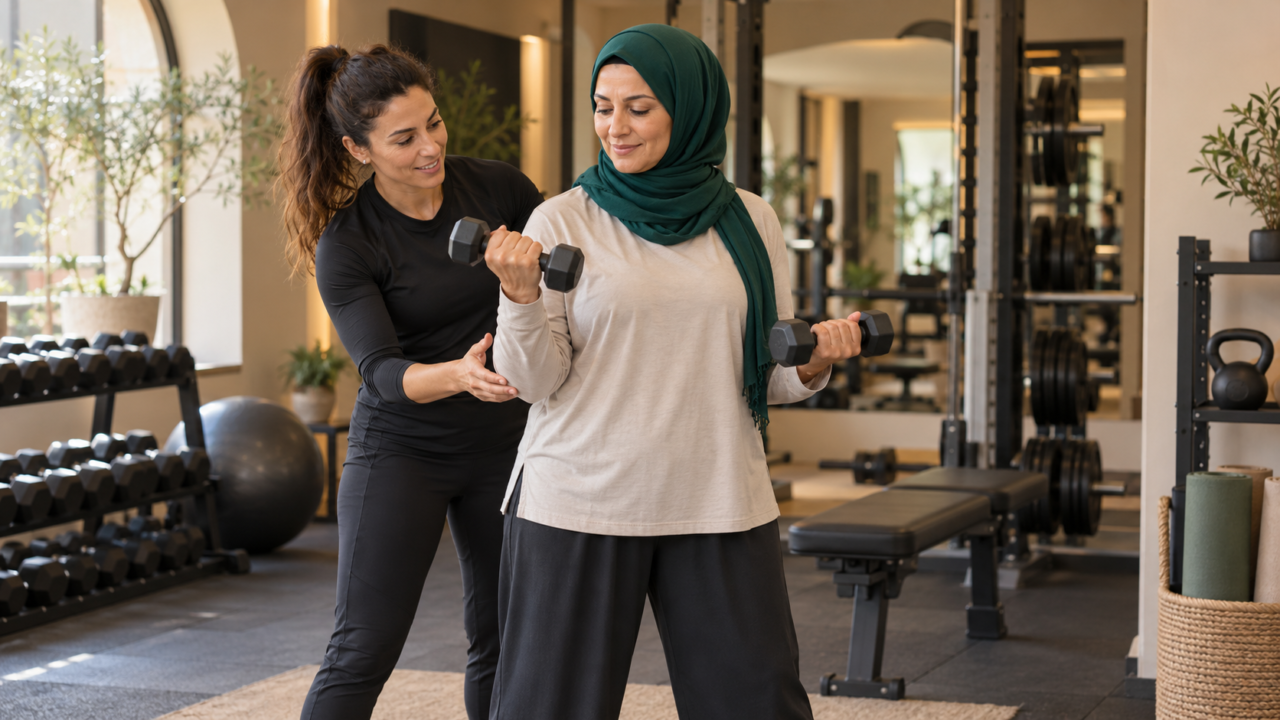
By Souad Gharib, founder of FemalePT
Have you ever told yourself you’ll start training again on Monday?
Then Monday comes, work gets busy, family needs something, you’re tired, and suddenly another week has passed.
I see this with women all the time.
And do you know what I always say?
You don’t need to make up for the months or years you haven’t trained. You just need to start where you are today.
Whether you’re 40, 50 or beyond, it’s never too late to start building strength.
Why getting back into exercise can feel harder after 40
Life changes.
You might be managing a career, looking after children, caring for elderly parents or going through perimenopause.
Your energy might not feel the same as it did ten years ago. You might notice changes in your sleep, joints, muscle strength or body composition.
But none of this means you should give up on exercise.
In fact, strength training becomes particularly valuable as we get older.
The NHS recommends muscle-strengthening activities on at least two days each week. Regular exercise, including weight-bearing and resistance activities, can also help support bone health during and after menopause.
The important thing is finding a routine you can maintain.
Week 1: Forget about being perfect
Your first week isn’t about burning hundreds of calories or lifting the heaviest weights.
It’s about getting comfortable again.
Start with two strength-training sessions. Each session can take around 30 minutes.
Here’s a simple full-body workout:
| Exercise | Sets | Repetitions |
|---|---|---|
| Bodyweight squats | 2 | 10 |
| Dumbbell rows | 2 | 10 each side |
| Glute bridges | 2 | 12 |
| Incline push-ups | 2 | 8 |
| Farmer’s carry | 2 | 30 seconds |
Rest for approximately 60–90 seconds between sets.
Choose exercises and resistance levels appropriate to your ability. You should feel challenged without losing control of your movements.
My advice? Finish your first workout feeling like you could have done a little more.
You don’t need to exhaust yourself to make progress.
Week 2: Build your routine
This is where consistency becomes important.
Keep your two strength sessions and try adding a few short walks during the week.
You don’t need to spend hours on a treadmill. A 15–20-minute walk after lunch or dinner can be an easy way to increase your daily movement.
If you’re particularly tired, shorten your workout rather than automatically cancelling it.
Even 20 minutes of movement can help you maintain the habit.
And remember, recovery matters too.
Week 3: Start challenging yourself
By now, some of the exercises may feel more familiar.
If your technique is comfortable, you can begin making small changes.
Try increasing the weight slightly, adding one or two repetitions, or completing a third set of selected exercises.
You don’t need to change everything at once.
For example, if you started with 4kg dumbbells and can now complete every repetition comfortably, you might be ready to try 5kg.
Progress doesn’t always mean lifting heavier. Sometimes it means moving better, feeling more confident or needing fewer breaks.
Week 4: Look at how far you’ve come
At the end of four weeks, ask yourself:
- Am I feeling more confident walking into the gym?
- Are the exercises becoming easier?
- Have I managed to train more consistently?
- Do I feel stronger in everyday activities?
- What would help me continue next month?
Don’t judge your progress entirely by the number on the scales.
You might be lifting more weight, moving more comfortably or simply enjoying exercise again.
Those achievements matter.
What about nutrition?
You don’t need a complicated meal plan to support your training.
Start with a few basics.
Include a source of protein in your main meals, eat plenty of fruit and vegetables, and make sure you’re eating enough to support your activity.
For example:
- Breakfast: Greek yoghurt, berries and eggs.
- Lunch: Chicken, rice and salad.
- Dinner: Salmon, potatoes and vegetables.
Keep things practical. If you’re working all day, preparing some ingredients in advance can make healthier meals easier.
And please don’t feel that one takeaway or missed workout means you’ve failed.
It’s what you do consistently that matters.
What if you’re going through menopause?
Perimenopause and menopause can bring changes in sleep, mood and physical comfort.
Some women experience joint aches, fatigue or disrupted sleep, making exercise feel more difficult.
Regular activity can support general health, muscle strength and bone health, but exercise isn’t a replacement for medical care or menopause treatment.
If symptoms are significantly affecting your daily life, speak with your GP about the support available.
If you’ve been inactive for a long time or have medical concerns, seek appropriate advice before beginning a new programme.
You don’t have to do it alone
One of the reasons I created FemalePT was to give women somewhere they could feel comfortable starting.
You don’t have to be fit before you join. You don’t need to know how to use every machine. And you certainly don’t need to feel embarrassed about starting again.
At our women-only gym in West London, we offer Small Group Personal Training, Bootcamp and one-to-one coaching.
If you prefer training at home or at your own gym, we also offer online coaching with structured workouts, nutrition guidance and weekly check-ins.
My message to you this week is simple: stop waiting until you feel ready.
Start small. Build your routine. And give yourself the opportunity to become stronger.
Souad x
FemalePT | We Train for Life
Ready to feel stronger again?
If you’ve been thinking about returning to exercise, we’d love to help.
Explore FemalePT training and online coaching or contact us to find the right starting point for you.
Women-only gym: 27 Elkstone Road, London W10 5NT.
