
How Heavy Should Women Over 35 Lift? A Simple Guide
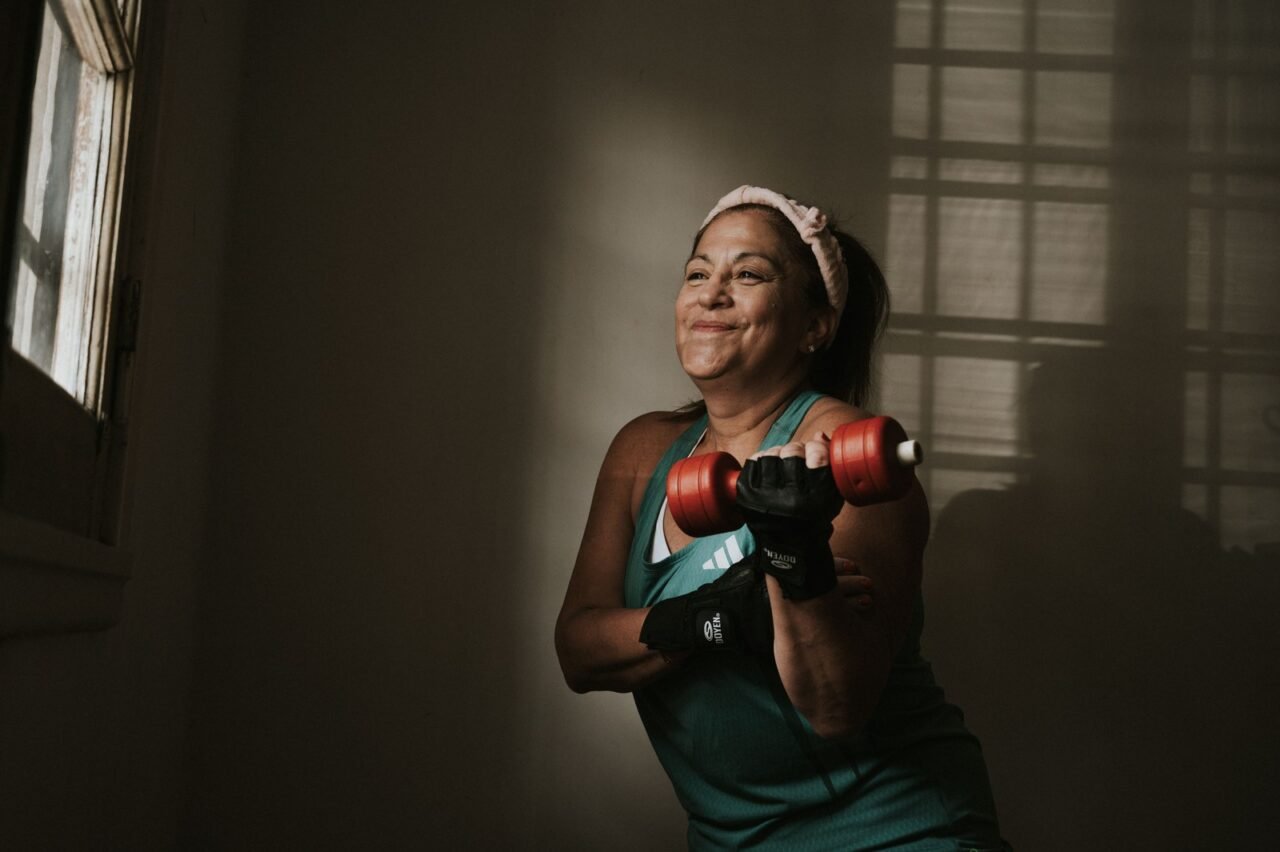
If you’ve been picking up the same pair of dumbbells for months, here’s something worth thinking about.
Are those weights still challenging you?
One of the biggest things I want women to understand about strength training is that you don’t need to lift extremely heavy weights. But you do need to give your muscles a reason to get stronger.
And that applies whether you’re 35, 45, 55 or starting much later.
Why your weights matter more than you think
Strength training isn’t just about changing how your body looks.
It’s about building and maintaining muscle, supporting your bones and making everyday activities easier.
The NHS recommends muscle-strengthening activities at least twice a week, working all the major muscle groups. These can include weights, resistance bands or bodyweight exercises.
The important thing is that the exercise challenges your muscles enough to need a rest before repeating it.
How do you know if your weights are too light?
Here’s a simple example.
Imagine you’re doing 12 dumbbell squats.
You reach repetition 12, put the weights down and feel as though you could easily do another 15.
That’s a sign the exercise may be too easy for your current strength.
Now imagine you reach repetition 10, your muscles are working hard, and repetitions 11 and 12 take concentration, but your technique stays controlled.
That’s much closer to what we’re looking for.
You don’t need to finish every set completely exhausted. You want enough challenge to make progress without sacrificing your technique.
The two-repetition check
When choosing a weight, try this:
- Choose a weight you can lift comfortably with good technique.
- Aim for around 8–12 controlled repetitions.
- At the end, ask yourself whether you could manage another two repetitions.
- If you could easily manage many more, consider a slightly heavier weight next time.
- If you cannot complete the movement properly, reduce the weight.
This is a coaching method, not a medical test or a rule that every exercise must follow.
For beginners, learning the movement comes before increasing the load.
When should you increase your weights?
You don’t need to increase them every week.
Let’s say you’re doing a dumbbell row with 5 kg. For several sessions, you comfortably complete three sets of 12 repetitions with good control.
You could try 6 kg at your next session, perhaps beginning with fewer repetitions.
If that feels manageable and your technique remains good, you’ve made progress.
This is called progressive overload: gradually increasing the demands of training as your body adapts.
You can progress by increasing the weight, adding repetitions, improving your control or completing more work over time.
What about perimenopause and menopause?
During midlife, strength training becomes particularly valuable.
Muscle and bone health matter as we age, and resistance training can help maintain strength and physical function.
Some women experience changes in sleep, energy, joint comfort and recovery during perimenopause. These can affect how training feels from one week to another.
That doesn’t mean you need to stop lifting weights.
It means your programme should be realistic and adaptable. Some weeks you’ll feel ready to push a little harder. Other weeks, maintaining your routine with a lighter session may be the sensible choice.
Exercise can support general wellbeing, but it isn’t a guaranteed treatment for menopausal symptoms. If symptoms are affecting daily life, speak to your GP.
A simple two-day strength plan
If you’re unsure where to begin, try two non-consecutive sessions each week.
| Exercise | Sets | Repetitions |
|---|---|---|
| Chair squat or goblet squat | 2 | 8–12 |
| Dumbbell or resistance-band row | 2 | 8–12 |
| Wall or incline press-up | 2 | 8–12 |
| Glute bridge | 2 | 10–12 |
| Standing calf raise | 2 | 10–12 |
Start with a short warm-up, rest between sets and focus on controlled movement.
Once you feel confident, you can gradually increase the challenge. You can also add walking or other aerobic activity alongside your strength sessions.
If you’re returning after a long break, managing an injury or living with a medical condition, get appropriate advice before increasing the intensity.
Three things I want you to remember
You don’t need to compare your weights with anyone else’s.
You don’t need to train until you’re exhausted.
And you certainly don’t need to wait until you feel confident before you begin.
What matters is having a plan that challenges you appropriately, allows you to recover and gives you a clear way to progress.
Because strength isn’t about lifting the most.
It’s about becoming stronger than you were before.
Ready to train with a plan that works for you?
At FemalePT, we help women build strength and confidence through women-only personal training in West London and online coaching wherever you are.
If you’re tired of guessing which exercises to do, how much weight to lift or whether you’re making progress, we can help you build a routine around your starting point and goals.
FemalePT Online Coaching is £150 per month, with structured workouts, practical nutrition guidance and ongoing accountability.
Explore FemalePT Online Coaching
We train for life.
Further reading from FemalePT: Strength Training for Busy Women.
